
Article Overview
Mudrooms are one of the most practical spaces in a home, but without proper storage, they can quickly become cluttered. This article explores mudroom cabinets ideas that improve daily organization through smart layouts, built-in storage, bench seating, cubbies, and durable finishes. It helps homeowners design entryways that stay functional, organized, and easy to maintain.
Mudrooms are where everything lands first. Shoes, jackets, backpacks, and sports gear all pass through this space daily. Without proper storage, clutter builds quickly and spreads into the rest of the home.
That is why thoughtful mudroom cabinets ideas are essential. Built-in cabinetry creates structure, improves flow, and makes it easier to keep everyday items organized.
Why Mudroom Cabinets Matter
Mudrooms handle some of the highest traffic in the home. They need to be durable, organized, and easy to use.
Custom cabinetry allows homeowners to create designated storage zones for each item. This prevents clutter from building up and keeps daily routines efficient.
Well-designed mudroom cabinets also support long-term organization by making it easier to maintain the space over time.
Built-In Cubbies for Everyday Storage
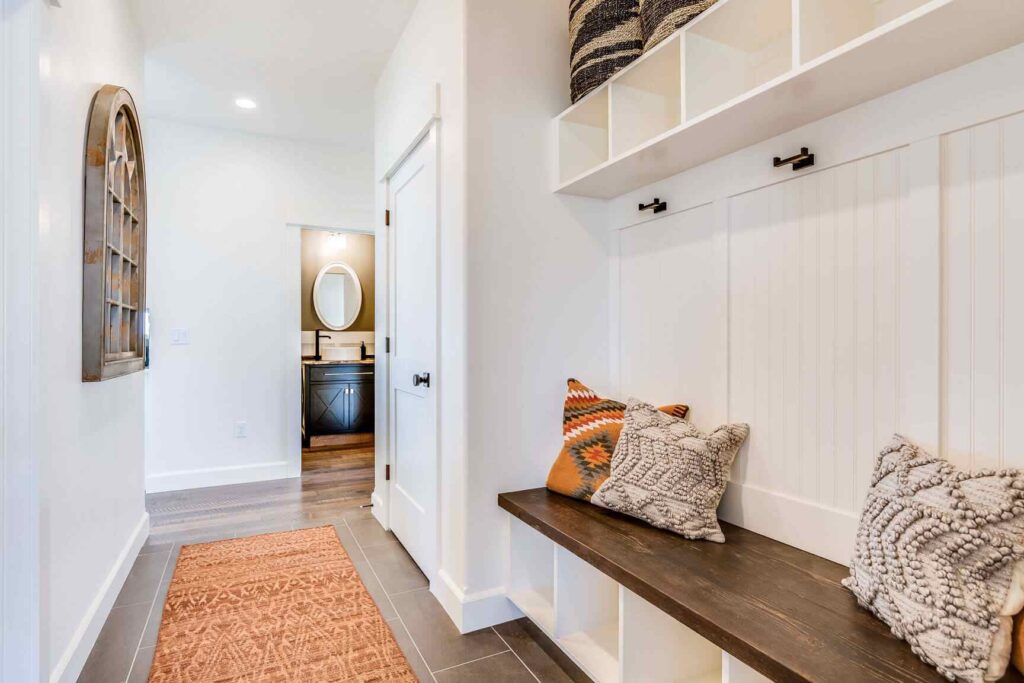
Cubbies are one of the most effective mudroom storage solutions. They provide quick access to frequently used items while keeping everything visible and organized.
Each family member can have their own dedicated cubby for shoes, bags, and personal items. This reduces clutter and simplifies daily routines.
Combining cubbies with hooks or upper storage creates a complete system that supports both short-term and long-term storage needs.
Bench Seating That Adds Function
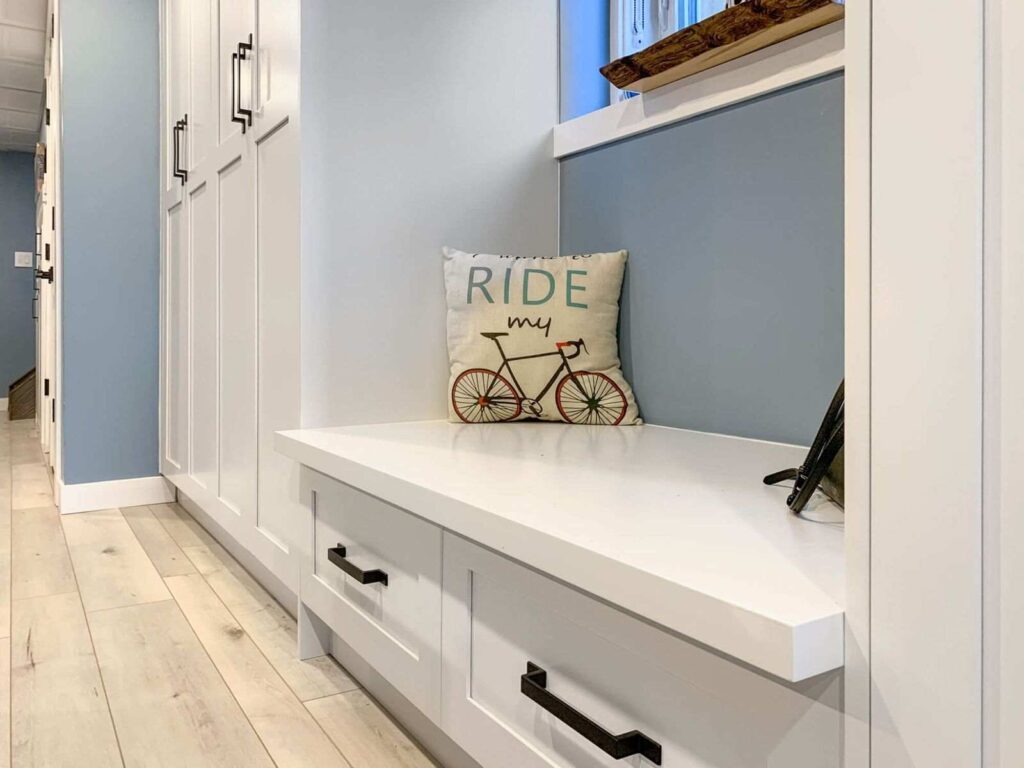
A built-in bench is one of the most practical features in a mudroom.
It provides a comfortable place to sit while putting on or removing shoes, which is especially helpful in busy households. The space beneath the bench can also be used for additional storage.
Bench seating works best when paired with drawers or open compartments to keep shoes and accessories organized.
Vertical Storage for Maximum Efficiency
Mudrooms often have limited floor space, which makes vertical storage essential.
Tall cabinets can be used to store coats, cleaning supplies, or seasonal items. Hooks and hanging storage maximize wall space while keeping frequently used items accessible.
Using vertical space effectively ensures the mudroom remains functional without feeling crowded.
Proper cabinet sizing and depth also play a role in maximizing storage, especially in tighter spaces, as explained in Cabinet Depth Guide: Base, Upper, Pantry & Clearances That Matter.
Closed Cabinets to Reduce Visual Clutter
While open storage is useful, closed cabinetry plays an important role in maintaining a clean look.
Cabinets with doors help hide clutter and keep less frequently used items out of sight. This is especially important in open-concept homes where mudrooms are visible from other areas.
Combining open and closed storage creates balance between accessibility and appearance.
Durable Finishes for High-Traffic Areas
Mudrooms are exposed to moisture, dirt, and heavy use. Choosing the right cabinet finishes is essential for long-term durability.
Surfaces should be easy to clean and resistant to wear. Painted, laminate, and other durable finishes are often used to ensure cabinets hold up over time.
Planning Storage Around Real-Life Needs
The most effective mudroom cabinets are designed around how the space is actually used.
Items such as boots, backpacks, helmets, and seasonal gear should be measured and accounted for during the design phase. This ensures storage solutions fit properly and remain functional over time.
Custom cabinetry allows homeowners to create storage that matches their lifestyle instead of adjusting to standard dimensions.
For a deeper look at how built-in storage improves daily routines, see Mudroom Built-In Cabinets: Custom Storage That Works Hard.
Layout Ideas That Improve Flow
Mudroom layouts should support easy movement in and out of the home.
Linear layouts work well in narrow spaces, while L-shaped or U-shaped layouts provide more storage in larger areas. The goal is to create a system where items can be stored quickly without blocking pathways.
Spacing between cabinets, bench areas, and walkways should be planned carefully to maintain comfort and accessibility.
Designing a Mudroom That Works Every Day
The best mudroom cabinet ideas focus on both organization and durability. Built-in cabinetry transforms cluttered entryways into structured, functional spaces that support daily routines.
By combining cubbies, bench seating, vertical storage, and durable finishes, homeowners can create a mudroom that stays organized and easy to maintain.
If you’re planning a mudroom upgrade, Zen Living can help design custom cabinetry that maximizes storage, improves flow, and delivers long-term performance.