

Article Overview
White kitchen sinks have become increasingly popular for their clean look and design versatility. This article explores whether white kitchen sinks are a lasting choice or a passing trend by comparing materials such as ceramic, fireclay, and composite. It also covers maintenance considerations and how sink selection pairs with cabinet finishes to create a cohesive kitchen design.
White kitchen sinks have been used for decades, yet they continue to appear in modern kitchen designs. Their bright, clean appearance makes them a natural focal point, especially in kitchens that prioritize light, openness, and simplicity.
The question many homeowners ask is whether white kitchen sinks are a timeless choice or simply a design trend.
Why White Kitchen Sinks Remain Popular
White sinks offer a neutral foundation that works across a wide range of kitchen styles. They complement both traditional and modern cabinetry while helping reflect light throughout the space.
Unlike stainless steel, which leans more industrial, white sinks feel softer and more integrated into the overall design. This makes them especially appealing in kitchens where cabinetry and finishes are the primary design features.
Their versatility is one of the main reasons they continue to remain relevant, especially in spaces designed around White Kitchen Cabinets That Don’t Look Boring: Styles, Finishes & Hardware.
Ceramic and Porcelain Sinks
Ceramic and porcelain sinks are among the most traditional white sink options.
They offer a smooth, glossy finish that is easy to clean and visually consistent. These sinks are often found in classic kitchen designs and are known for their durability when properly maintained.
However, they can be more susceptible to chipping if heavy objects are dropped. Over time, surface wear may become more noticeable compared to newer materials.
Fireclay Sinks
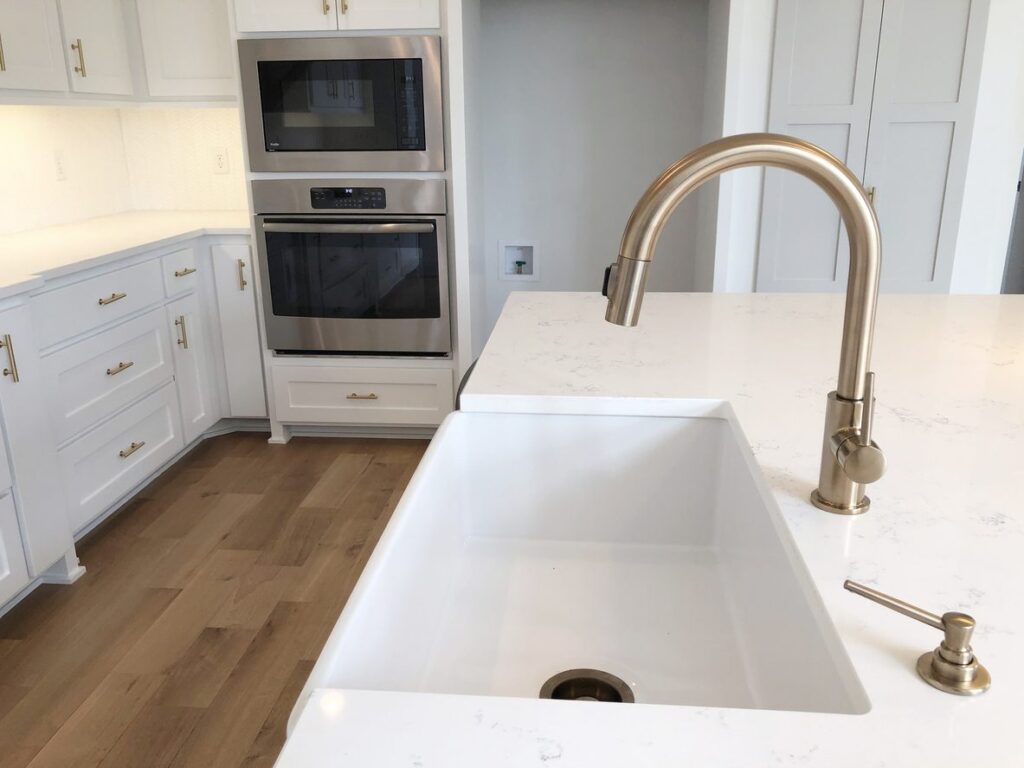
Fireclay sinks are considered a premium option within the white sink category.
They are made by molding clay and firing it at extremely high temperatures, creating a dense and durable surface. Fireclay sinks are highly resistant to scratches, stains, and everyday wear.
They are commonly used in farmhouse-style kitchens but also work well in modern spaces when paired with clean cabinetry lines.
Fireclay combines traditional appearance with improved durability, making it a strong long-term option.
Composite Sinks
Composite sinks are engineered using a blend of materials such as quartz or granite combined with resin.
These sinks are designed for durability and resistance to scratches, stains, and heat. They often have a slightly matte finish compared to ceramic or fireclay.
Composite white sinks are a popular choice for homeowners looking for a balance between durability and modern design.
They tend to be more forgiving in high-use kitchens where wear and tear is a concern.
Maintenance and Everyday Use
One of the main concerns homeowners have about white kitchen sinks is maintenance.
White surfaces can show stains more easily than darker materials, especially with coffee, tea, or food residue. However, with proper cleaning habits, most modern sink materials are designed to resist staining.
Regular cleaning and avoiding harsh abrasives help maintain the finish over time.
Material choice plays a major role in how easy the sink is to maintain, which is why selecting the right option for your lifestyle is important.
Pairing White Sinks With Cabinet Finishes
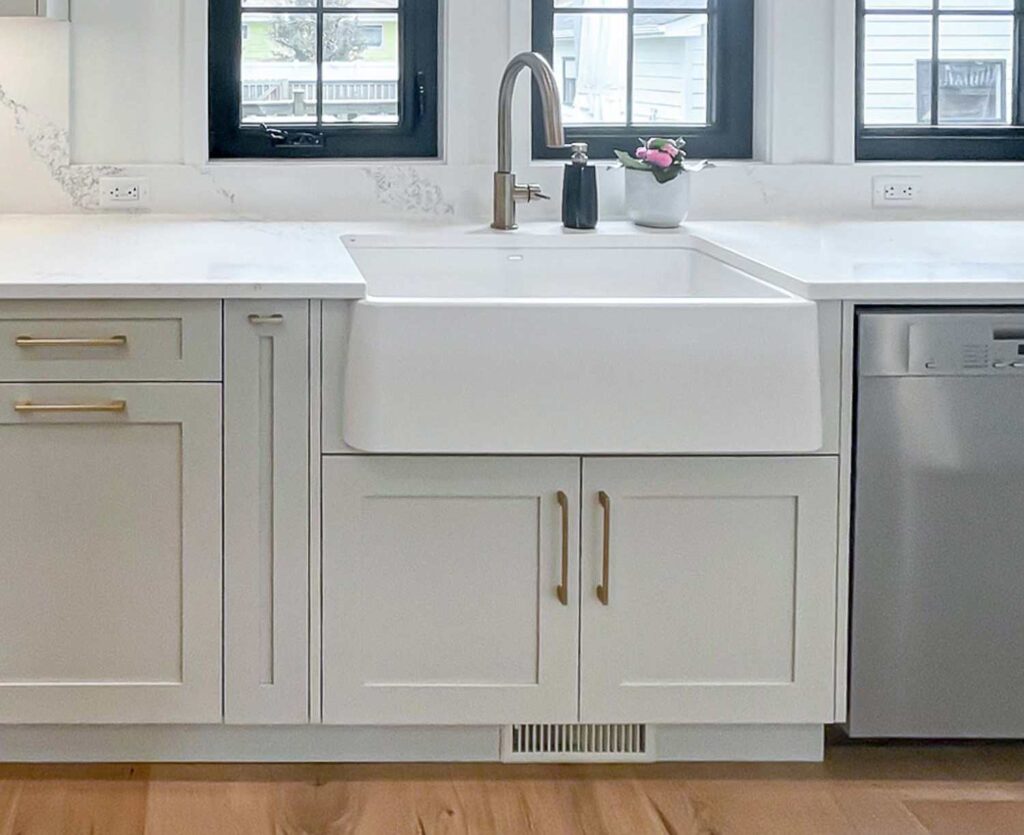
White kitchen sinks work best when paired thoughtfully with cabinetry and finishes.
They complement painted cabinetry, especially in neutral tones, creating a clean and cohesive look. They also contrast well with darker cabinetry, adding brightness to the space.
White sinks also pair well with a variety of countertop materials, making them a flexible design choice.
Design Styles That Work With White Sinks
White sinks are often associated with farmhouse kitchens, but they are equally effective in modern and transitional designs.
In modern kitchens, they are typically paired with clean lines, flat-panel cabinetry, and minimal hardware. In traditional spaces, they work alongside detailed cabinetry and warmer finishes.
The key is ensuring the sink integrates with the overall design rather than standing out as an isolated feature, which is especially important when planning layouts and finishes for How Much Are Kitchen Renovations in 2026?
Are White Kitchen Sinks Worth It
The decision ultimately comes down to lifestyle, design preferences, and maintenance expectations.
White kitchen sinks offer strong visual appeal and design flexibility. They work across a wide range of kitchen styles and can enhance both light and contrast within the space.
For homeowners who prioritize a clean, timeless look, white sinks remain a reliable choice.
Choosing the Right Sink for Your Kitchen
Selecting the right sink involves balancing durability, maintenance, and design.
While trends come and go, materials and functionality determine long-term satisfaction. White kitchen sinks continue to perform well because they combine classic design with modern material improvements.
When paired with the right cabinetry and finishes, they create a kitchen that feels both cohesive and enduring.
If you’re planning a kitchen upgrade and want cabinetry and design elements that work together seamlessly, Zen Living can help you create a space that balances style, function, and long-term performance.