
Article Overview
For builders managing repeated floor plans or multi-home developments, cabinetry becomes easier to coordinate when core specifications are established before individual orders begin. Standardized cabinet packages can improve consistency in layouts, finishes, hardware, ordering documentation, and installation expectations while still allowing controlled customization. This article explains how builders can create repeatable cabinetry packages, decide which specifications should remain consistent, and manage upgrades without creating unnecessary variation. A more structured approach can support cost control, forecasting, ordering accuracy, and smoother installation across multiple homes.
Builders completing several homes often repeat many of the same cabinetry decisions from one project to the next. Without a defined process, however, small variations in layouts, finishes, hardware, or documentation can create additional work for estimators, purchasers, site teams, and installers.
Well-planned cabinet packages for builders establish a repeatable baseline. Instead of treating every home as an entirely separate cabinetry project, builders can standardize the elements that benefit from consistency and clearly define where project-specific changes are permitted.
Why Standardize Cabinet Packages for Builders?
Standardization creates a common starting point for estimating, ordering, production coordination, and installation. A package might define the typical cabinet layout for a repeated floor plan, approved door styles and finishes, hardware selections, accessories, and supporting components.
The value becomes clearer as project volume increases. A builder completing ten homes based on three recurring floor plans can establish a package for each layout rather than rebuilding the cabinetry specification for every order. Purchasing teams have a clearer scope to reference, while installers become familiar with the configurations they will encounter.
Builders considering consistent material specifications can also read our article Why Are More Homeowners and Contractors Choosing TFL Cabinets? to further understand that material and finish considerations can help determine whether TFL is appropriate for repeatable cabinet specifications.
Standardization Can Improve Cost and Schedule Control
Repeatable specifications can make forecasting and order review more manageable because the builder and cabinet supplier are working from an established scope. Project-specific conditions still need to be checked, but fewer variables make changes easier to identify before production.
Consider a builder completing several homes with the same kitchen footprint. If one home receives a different cabinet configuration but the change is not clearly documented, the discrepancy may only become apparent during installation. Clarification or replacement components could then delay the cabinet run and affect countertop templating or subsequent finishing work.
A standardized package gives the team a baseline against which changes can be reviewed. Instead of confirming the entire specification again, attention can be directed toward the exceptions.
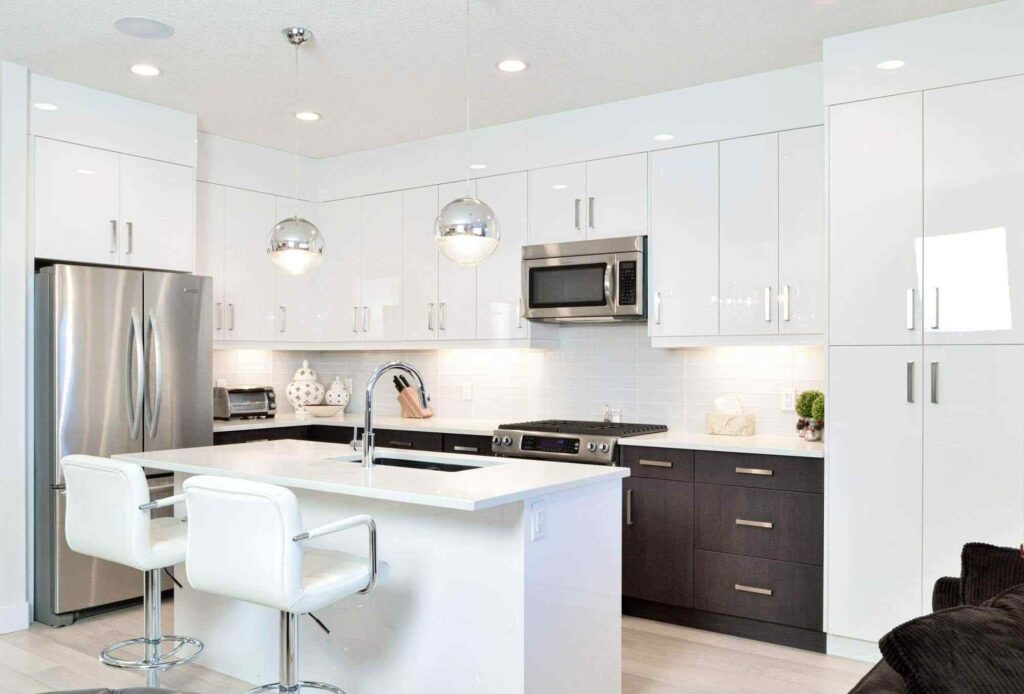
Builders developing repeatable layouts can review kitchen cabinet options to compare base, wall, pantry, and other cabinet configurations before establishing a standard package. Defining those configurations early can simplify future orders for homes based on the same floor plan.
What Should Remain Standard Across Multiple Homes?
The most useful package is detailed enough to reduce unnecessary variation without becoming too rigid for different floor plans or buyer requirements. Common elements may include cabinet configurations, door styles, finishes, hardware, fillers, panels, and frequently used accessories.
Documentation is equally important. The approved package should identify what is included so estimating, purchasing, site, installation, and supplier teams are working from the same information.
Accessories can also be built into the package rather than selected independently for every home. Reviewing cabinet accessories can help builders decide which pull-outs, organizers, hinges, slides, and other functional components belong in the standard package and which should remain optional upgrades. Defining those choices in advance can make ordering more consistent and reduce repeated selection decisions.
Can Builders Standardize Cabinets Without Eliminating Customization?
Standardization does not require every home to be identical. A practical approach is controlled customization, where a base package is established alongside a limited number of approved alternatives.
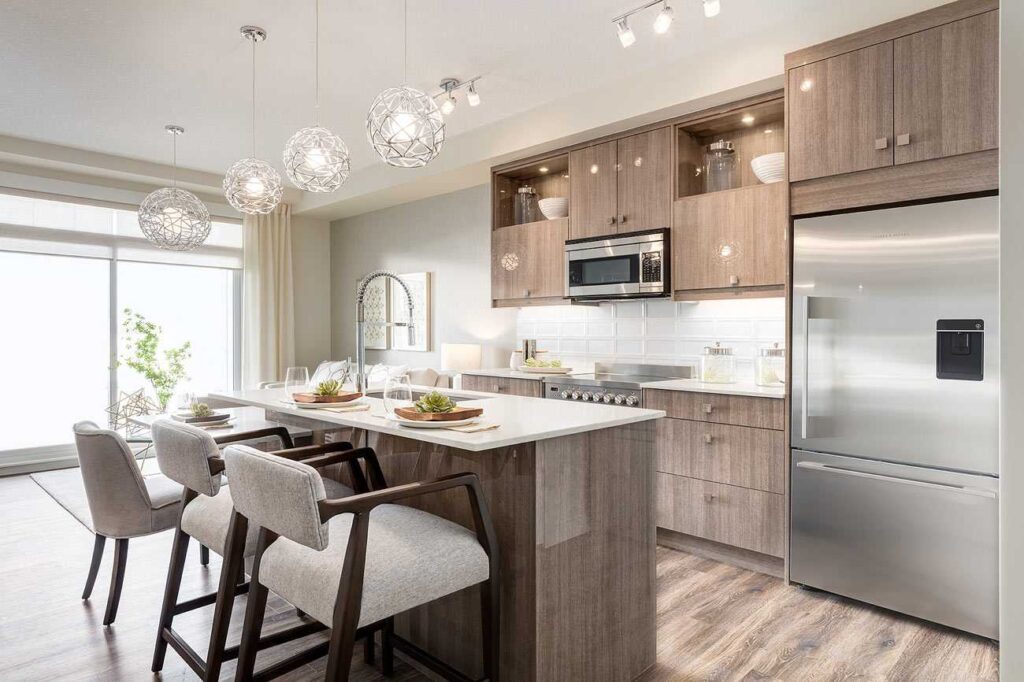
For example, a builder might standardize the cabinet layout and door profile while offering several approved finishes. An upgraded package could introduce selected storage accessories or another finish category without changing the overall ordering process.
Builders evaluating TFL within this type of program can review what to consider when selecting a TFL cabinet supplier in Calgary. Understanding material consistency, ordering considerations, and supplier support can help determine whether a finish option is suitable for repeated use across several homes.
Where door selection forms part of the upgrade strategy, Zen Living’s cabinet door styles provide a useful product reference. Preselecting a limited range of approved profiles can give buyers meaningful choice while keeping the specification process controlled and easier for project teams to manage.
Creating a Cabinet Program That Scales With Your Project
Effective cabinet packages for builders standardize the decisions that benefit from consistency while keeping customization structured and manageable. When cabinet layouts, finishes, hardware, accessories, and upgrade paths are established in advance, project teams can spend less time rebuilding specifications and more time reviewing the exceptions that genuinely require attention.
The package should remain a working project tool. When a floor plan or approved specification changes, the documentation should be updated so future orders continue from the correct baseline. That consistency can improve communication between builders, suppliers, and installers while making cabinetry procurement easier to manage as project volume grows.
If you are planning multiple homes or repeat floor plans, contact Zen Living to discuss cabinetry packages that can support consistent specifications, efficient ordering, and coordinated project delivery across upcoming builds.