

Article Overview
Laundry rooms require efficient storage to stay organized and functional. This article explains how to organize laundry room cabinets by outlining practical upgrades that increase storage quickly, including vertical cabinetry, adjustable shelving, and built-in accessories. It also reviews standard cabinet depths and heights, along with add-ons that improve workflow and reduce clutter. Homeowners will gain clear guidance on designing a laundry space that is streamlined, durable, and tailored to everyday use.
Laundry rooms are often one of the smallest yet hardest-working spaces in the home. Without proper cabinetry, clutter builds quickly, cleaning supplies become disorganized, and workflow suffers.
If you’ve been searching how to organize laundry room cabinets effectively, the solution is not just adding more shelves. It’s designing cabinetry that works with how the space is actually used.
Below are ten cabinet upgrades that dramatically improve storage and efficiency.
1. Full-Height Upper Cabinets
Standard upper cabinets installed above washer and dryer units immediately increase vertical storage. Rather than leaving open wall space, full-height cabinets maximize usable square footage and keep less frequently used items out of sight.
Upper cabinets typically range from 12 to 24 inches deep, with 12 inches being ideal in tighter laundry rooms to prevent crowding.
2. Adjustable Shelving for Flexible Storage
Laundry storage needs change over time. Adjustable shelves allow you to reconfigure cabinet interiors to accommodate bulk detergent containers, baskets, or folded linens.
This flexibility prevents wasted vertical space and ensures cabinets adapt to your needs rather than the other way around.
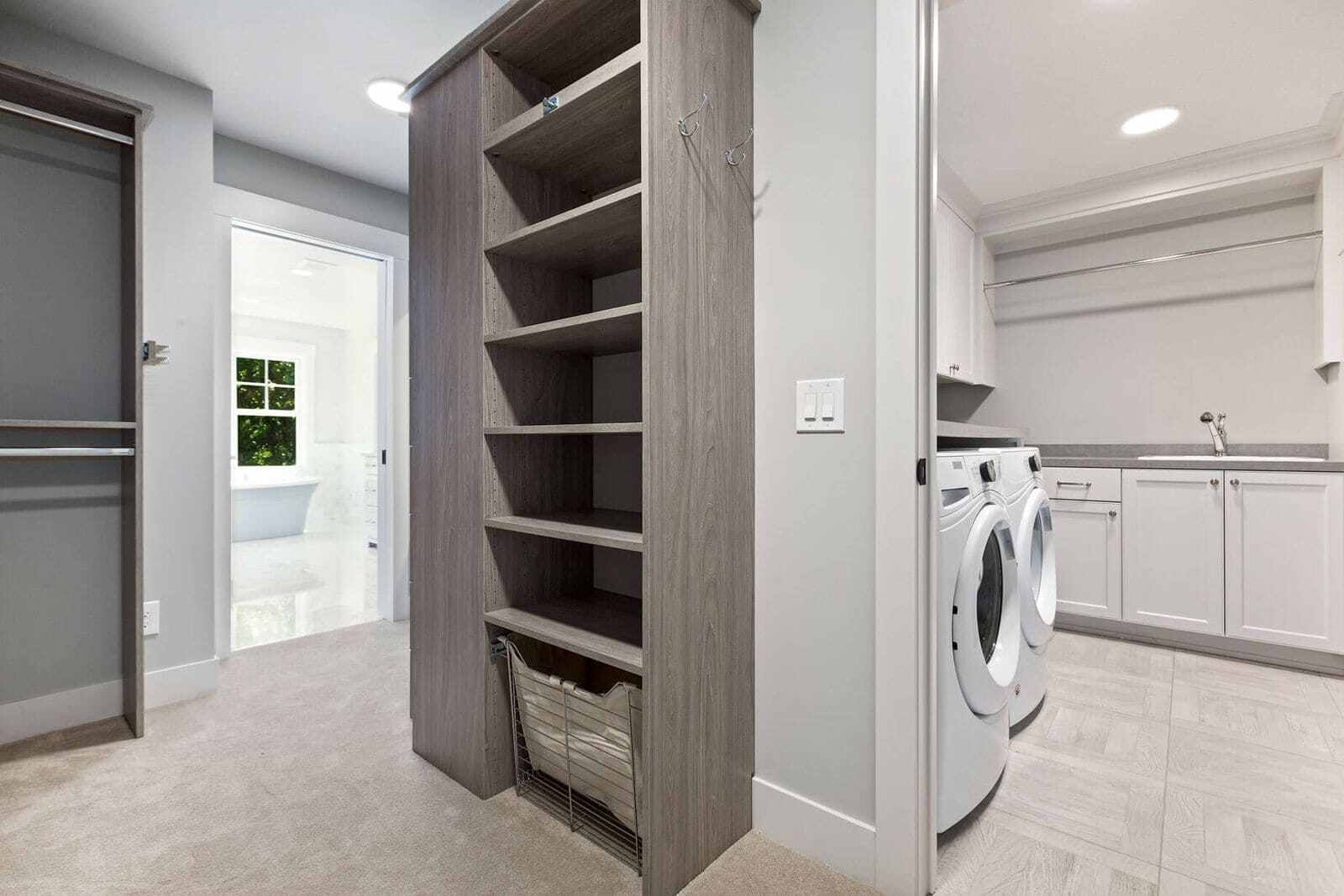
3. Pull-Out Hampers
Integrated pull-out hampers reduce visible clutter and simplify sorting. Instead of loose baskets on the floor, built-in systems keep everything concealed and organized within base cabinetry.
This upgrade improves both workflow and visual cleanliness.
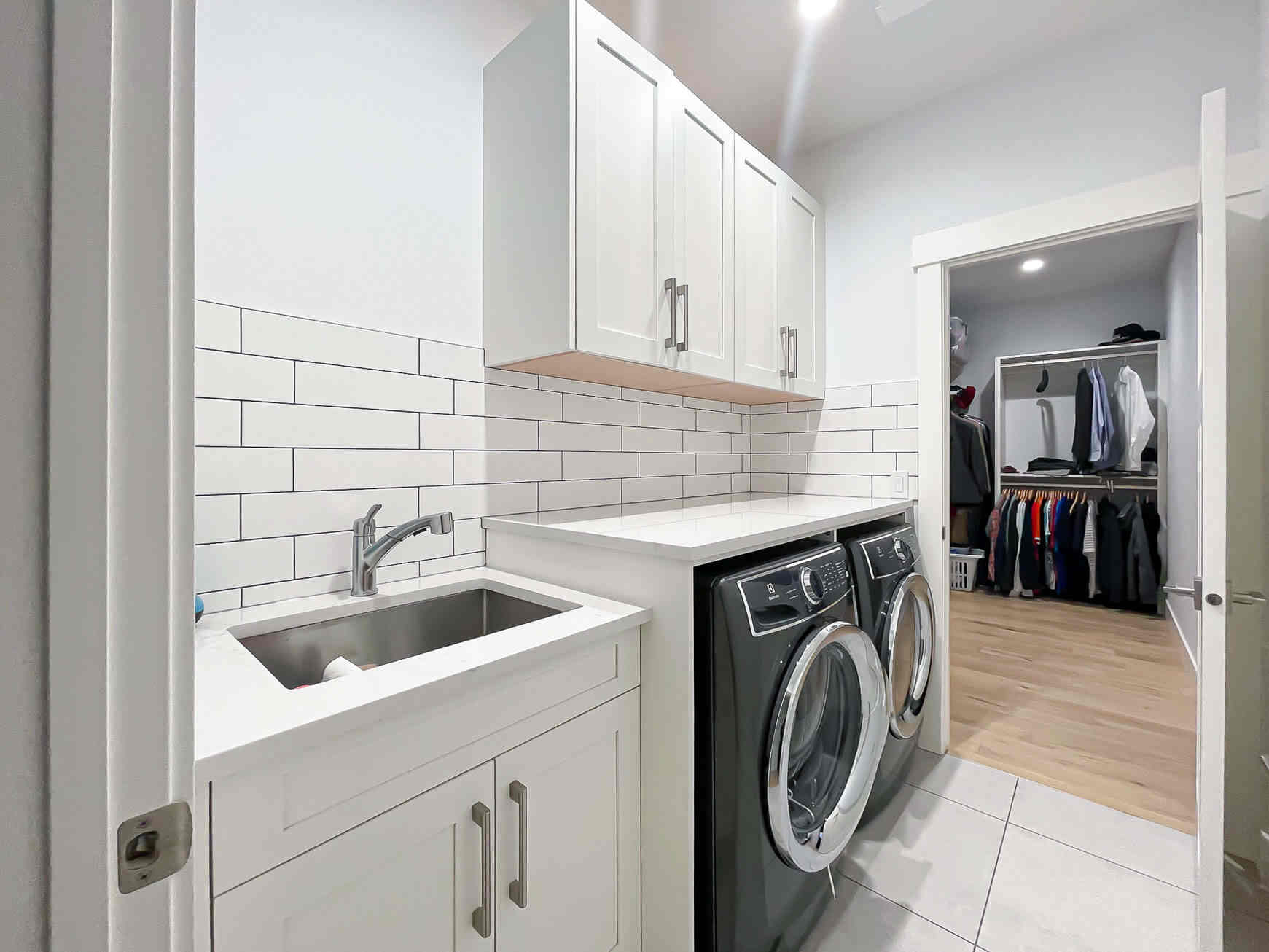
4. Deep Base Cabinets for Bulk Storage
Standard base cabinet depth is typically 24 inches, which works well for laundry rooms. This depth allows for storing oversized detergent containers, cleaning supplies, and storage bins without cramming.
When planning how to organize laundry room cabinets, depth plays a critical role. Too shallow and items won’t fit properly. Too deep without internal organizers and things get lost in the back.
5. Vertical Divider Storage
Tall, narrow cabinets with vertical dividers are ideal for storing ironing boards, drying racks, and cleaning tools. Instead of leaning items in corners, these built-in compartments keep everything upright and accessible.
Vertical storage makes better use of narrow wall space that might otherwise go unused.
6. Slide-Out Cleaning Supply Trays
Pull-out trays or sliding shelves inside lower cabinets prevent bending and reaching. These additions improve accessibility and allow you to see all stored items at once.
They are especially useful in deeper cabinets where items tend to disappear at the back.
7. Built-In Countertop Above Appliances
Adding cabinetry with a countertop above front-load washer and dryer units creates folding space and improves daily workflow. It also provides an opportunity to extend storage both above and below.
A functional counter surface transforms the laundry room from purely utility to an organized workspace.
8. Tall Utility Cabinets
Full-height utility cabinets typically range from 84 to 96 inches in height. These maximize vertical storage and create space for vacuums, mops, and large household supplies.
Proper cabinet height ensures you are using every available inch of wall space effectively.
9. Concealed Drying Rods
Hidden pull-out rods installed beneath upper cabinets provide temporary hanging space for delicate items. When not in use, they slide back into place, maintaining a streamlined appearance.
This simple addition improves function without increasing visual clutter.
10. Overhead Storage for Seasonal Items
Ceiling-height cabinetry can store seasonal linens, extra paper products, or rarely used supplies. While not needed daily, this overhead storage reduces overflow into other areas of the home.
When planning how to organize laundry room cabinets, thinking vertically often delivers the fastest storage gains.
Standard Cabinet Dimensions That Work Best
Laundry room cabinetry typically follows standard kitchen cabinet dimensions for efficiency and durability.
Base cabinets are generally 24 inches deep and 34.5 inches high before countertop installation. Upper cabinets are commonly 12 inches deep and vary in height depending on ceiling clearance.
Proper installation height also affects usability and storage access, which we explain in more detail in our guide on How High You Should Hang Laundry Room Cabinets.
In compact laundry rooms, 12-inch-deep uppers prevent overcrowding while still providing meaningful storage. In larger spaces, deeper cabinets can be used if balanced with proper workflow clearance.
Choosing the correct depth and height ensures appliances fit comfortably while maximizing usable storage space.
Add-Ons That Improve Organization
Smart internal accessories elevate standard cabinetry into highly functional storage systems.
Popular add-ons include pull-out shelves, drawer dividers, integrated hampers, tray dividers, soft-close drawers, adjustable shelving systems, and concealed garbage or recycling pull-outs.
These features reduce wasted space, improve visibility, and make daily routines more efficient.
Selecting durable finishes is especially important in high-traffic areas, and you can explore available options in our Cabinet Finishes & Colours guide.
Designing a Laundry Room That Works for You
Understanding how to organize laundry room cabinets starts with evaluating how the space is used. Consider how often you wash, fold, hang, and store items. Design decisions should support those habits.
Many of the same storage principles apply to entryways, and we explore this further in our article on The Benefits Of Custom Mudroom Cabinets For Mudrooms And Laundry Rooms.
Cabinet depth, height, and internal organization features all contribute to a laundry room that feels streamlined rather than chaotic. Well-planned cabinetry turns even small spaces into highly efficient work zones.
At Zen Living, laundry cabinetry is designed with workflow, durability, and long-term functionality in mind. The right layout and smart storage features can transform a utility room into one of the most organized spaces in your home.
If you’re planning a laundry room upgrade, thoughtful cabinetry design makes the biggest impact. Reach out to our team today to schedule a design consultation for your laundry room.