
Article Overview
Quartz countertops are known for their durability, low maintenance, and consistent appearance, making them a popular choice for modern kitchens and bathrooms. This article explains what are the pros and cons of quartz countertops by examining performance, design flexibility, pricing factors, and everyday usability. It helps homeowners understand where quartz excels, where it requires care, and how to determine whether it aligns with their lifestyle, cooking habits, and long-term investment goals.
Quartz countertops continue to dominate kitchen and bathroom design conversations. They are praised for durability, low maintenance, and consistent appearance. But many homeowners who choose quartz later admit there were details they did not fully understand at the start.
If you have been researching what are the pros and cons of quartz countertops, this guide walks through the practical realities that influence long-term satisfaction.
1. Quartz Is Durable but Not Indestructible
Quartz is engineered from natural stone combined with resins, creating a non-porous and highly stain-resistant surface. It performs exceptionally well under everyday use and does not require sealing.
However, quartz is not immune to damage. Heavy impact along exposed edges can cause chipping. While rare, it is possible if a heavy object strikes a vulnerable corner. Durability is a major advantage, but understanding limits helps protect your investment.
2. Heat and Scratching Myths Explained
There is frequent confusion about how quartz handles heat and scratching.
Quartz is highly scratch resistant during normal kitchen use. Everyday activities like sliding dishes or light knife contact will not typically damage the surface. That said, cutting boards are still recommended to preserve the finish.
Heat requires more caution. Because quartz contains resin binders, extreme direct heat can cause discoloration or structural stress. Placing a hot pan directly from the stove or oven onto the surface can damage it. Trivets are a simple preventative habit that protects long-term performance.
Quartz handles daily wear extremely well. It just should not be treated like a cast-iron stovetop.
3. Design Consistency Is a Major Advantage
One of the strongest pros when evaluating what are the pros and cons of quartz countertops is design control. Unlike natural stone, quartz offers consistent colour and pattern from slab to slab.
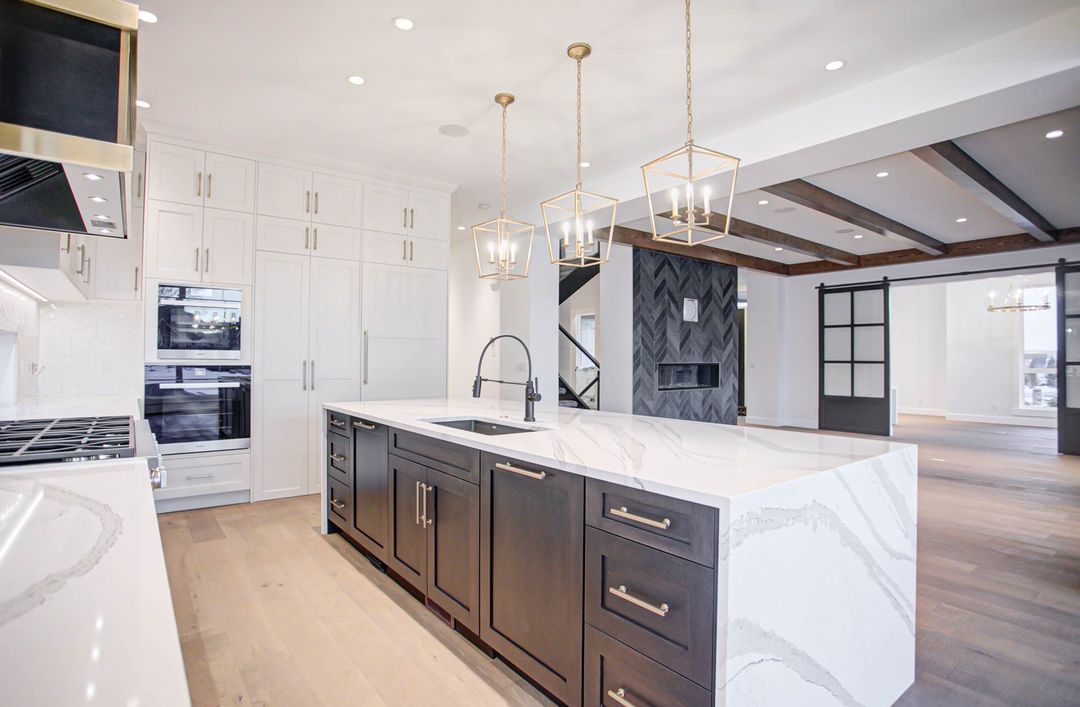
This predictability makes coordinating cabinetry, backsplash, flooring, and hardware much easier. Large islands, waterfall edges, and full-height backsplashes benefit from this uniformity.
For homeowners who want a clean, cohesive aesthetic without unexpected variation, quartz offers strong visual reliability.
4. Best Quartz for Busy Families and Heavy Cooking
Quartz performs particularly well in high-traffic kitchens when paired with smart design choices.
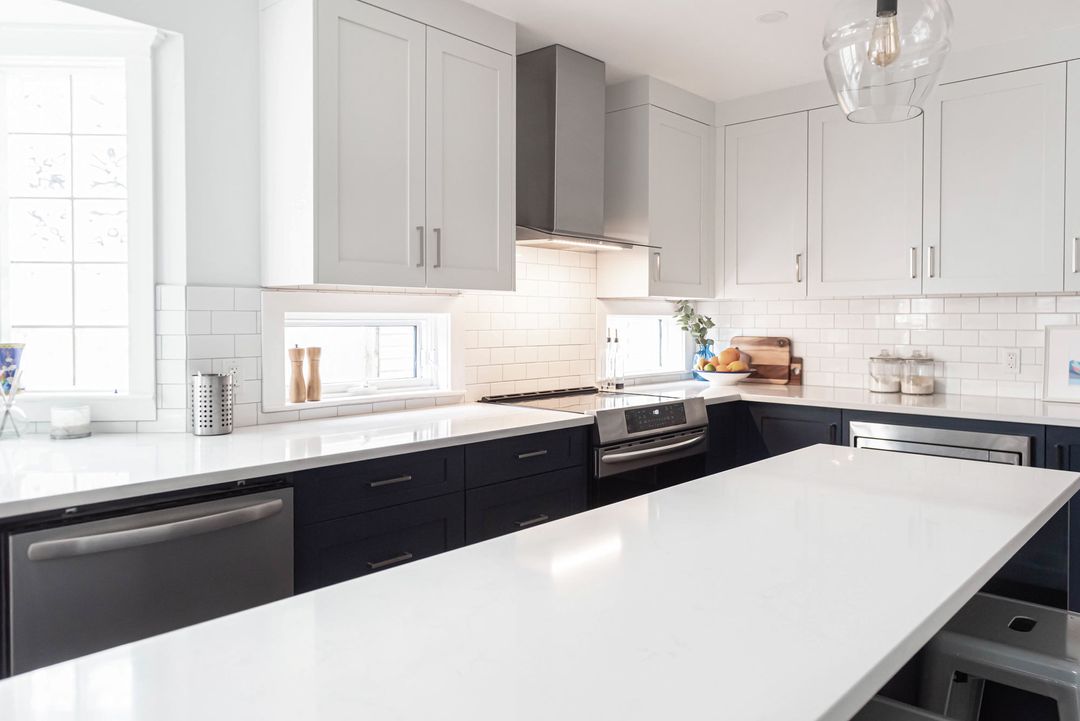
Busy households often benefit from mid-tone colours or subtle veining that help conceal small crumbs or water marks between cleanings. Polished finishes are generally easier to wipe down than matte finishes in heavy-use kitchens.
Three-centimetre thickness is typically preferred for durability and structural stability in active cooking environments. When selected thoughtfully, quartz works extremely well for families who cook often and use their kitchen daily.
5. What Actually Drives the Cost of Quartz
When asking what are the pros and cons of quartz countertops, many homeowners focus only on the slab price. In reality, total cost depends on several design decisions.
Thickness selection influences material and fabrication requirements. Edge profile complexity affects labour. Sink cutouts, cooktop openings, and outlet adjustments increase fabrication time. Full-height backsplashes and waterfall panels add both material and installation considerations.
If you want a deeper breakdown of how colour, finish, thickness, and edge profiles affect both performance and design, our guide on How To Choose Quartz Countertops explores those decisions in more detail.
Two kitchens using the same quartz colour can vary significantly in overall cost because of layout and detailing choices. Understanding this early allows for better planning and fewer surprises.
6. Maintenance Is Low but Not Zero
Quartz does not require sealing, which is one of its strongest advantages compared to many natural stones. Daily cleaning with mild soap and water is usually sufficient.
However, harsh chemical cleaners and abrasive pads should be avoided. Over time, aggressive products can dull the finish or affect surface appearance. Low maintenance does not mean no care. Proper habits preserve the surface for years.
For a step-by-step breakdown of daily care and safe cleaning methods, see our guide on How To Clean Quartz Countertops.
7. Quartz Is Not Ideal for Every Environment
Quartz performs exceptionally well indoors, but it may not be suitable for every setting. Outdoor kitchens or spaces exposed to prolonged direct sunlight can experience fading or discoloration over time.
Understanding where quartz excels and where alternatives may be more appropriate ensures you select the right material for your specific environment.
Quartz Is Right for You If
Quartz may align with your needs if you prefer consistent colour and controlled design. It works well if you value stain resistance and do not want to seal countertops regularly. It suits homeowners who cook frequently but use protective habits like trivets and cutting boards. It is ideal for those seeking a modern, clean aesthetic with predictable performance.
If these priorities reflect your lifestyle, quartz is likely a strong fit.
Making the Right Choice for Your Home
Understanding what are the pros and cons of quartz countertops helps you move beyond marketing claims and focus on practical performance. Quartz offers durability, low maintenance, and design consistency, but it requires thoughtful use around heat and impact.
Selecting the right thickness, edge profile, and layout integration ensures the surface performs as well as it looks. When coordinated properly with cabinetry and overall design, quartz delivers long-term value and everyday functionality.
At Zen Living, quartz selection is approached as part of the full kitchen or bathroom design strategy. Material choice, cabinet configuration, and workflow are evaluated together so the finished space feels cohesive, durable, and tailored to how you live.
If you are considering quartz and want guidance that balances design, durability, and long-term value, the right planning makes all the difference. Contact our quartz experts today for a free design consultation.