
Article Overview
When planning a walk-in closet, size directly impacts comfort, storage efficiency, and long-term usability. This article explains how big a walk-in closet should be based on standard dimensions, layout considerations, and lifestyle needs. It also outlines practical design tips to help homeowners maximize storage, circulation, and functionality, whether planning a compact walk-in or a spacious primary suite closet.
What Defines a Walk-In Closet?
Designing a walk-in closet is about more than adding square footage. The right size determines how functional the space feels, how efficiently storage is used, and whether the closet enhances daily routines or creates frustration. Homeowners often ask early in the process how big a walk-in closet should be, and the answer depends on both layout and use.
A walk-in closet is defined by the ability to step inside the space while comfortably accessing storage. Unlike built-in closets, walk-ins require enough floor area to move freely, access hanging space, and open doors without obstruction. Even a small walk-in should provide standing room, clear access to storage, and enough circulation to feel comfortable.
Minimum Walk-In Closet Dimensions
The smallest functional walk-in closet typically measures about five feet by five feet. This allows for hanging storage along one wall and approximately thirty-six inches of clear space to move. While compact, this size works well for single users, secondary bedrooms, or guest spaces. Anything smaller tends to feel tight and limits storage flexibility.
Common Walk-In Closet Layouts and Sizes
Single-sided walk-in closets are a common solution when space is limited. These layouts usually measure four to five feet wide and six to eight feet long, with storage along one wall and open floor space in front. They are often found in condos or townhomes and can function well when thoughtfully designed.
Double-sided walk-in closets offer storage on two opposite walls with a central aisle. These closets typically require a minimum width of six to seven feet, with seven to eight feet being more comfortable. A clear aisle of thirty-six to forty-two inches allows for easy movement and daily use without crowding.
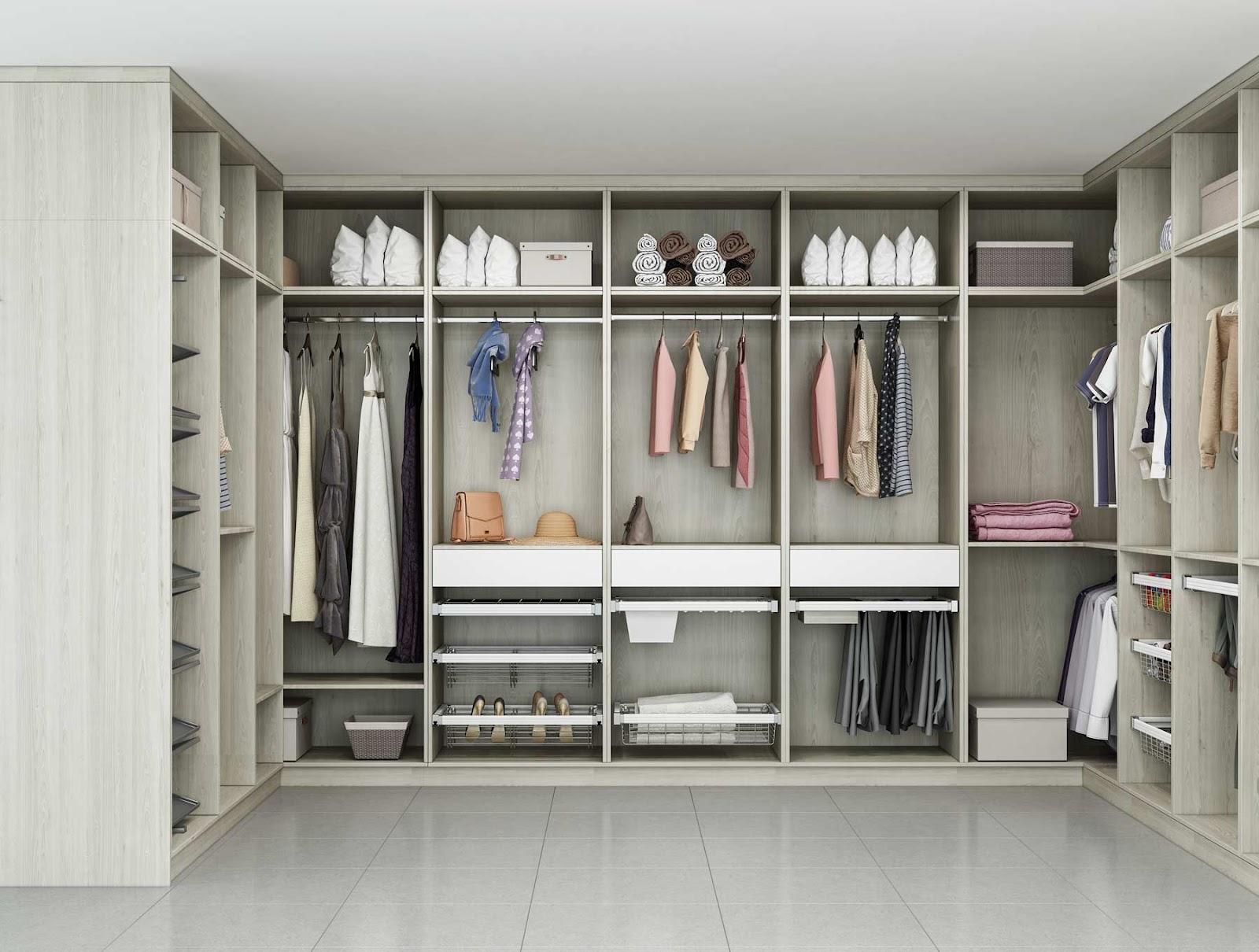
U-shaped walk-in closets are common in primary bedrooms and provide storage on three walls. These layouts generally start around seven feet by ten feet, with eight feet by ten feet or larger offering better flexibility. This configuration allows for clear zones for hanging, shelving, and drawers and works especially well for shared closets.
How Big Should a Walk-In Closet Be for Two People?
When designing for two people, size becomes more important. Shared walk-in closets benefit from additional width and clearly defined storage areas to avoid congestion. A minimum size of seven feet by ten feet works, but many homeowners prefer eight feet by ten or twelve feet for improved comfort and organization.
If you’re still deciding whether a walk-in is the right solution for your space, this guide on Walk-in vs. Built-in Closet: What’s the Right Option for You? that breaks down the pros, cons, and best use cases for each option.
Design Factors That Affect Walk-In Closet Size
Several design factors directly influence how big a walk-in closet should be. Hanging storage typically requires a depth of about twenty-four inches, while circulation space should be no less than thirty-six inches and closer to forty-two inches for shared closets. Door placement also matters. Pocket or sliding doors reduce wasted space, while swing doors require additional clearance. Ceiling height plays a role as well, since taller ceilings allow for double hanging and upper shelving without increasing the footprint.
Design Tips to Maximize Walk-In Closet Space
Thoughtful design can make a walk-in closet feel larger without increasing its size. Custom cabinetry allows storage to be tailored to your wardrobe instead of forcing clothing into standard configurations. Adjustable shelves, drawer inserts, and properly planned hanging heights improve organization and reduce wasted space. Integrated drawers and accessories keep smaller items visible and accessible, while layered lighting improves both function and atmosphere. Durable materials and quality hardware are also important, as closets experience daily use and should be built to last.
Two areas consistently deliver the biggest impact in walk-in closet design:
- Adequate circulation space combined with properly sized hanging depth
- Custom storage elements such as drawers, organizers, and adjustable shelving
For a deeper look at how drawers, shelving, and accessories improve everyday usability, this guide covers Everything You Need to Know About Closet Organizers.
Does Walk-In Closet Size Affect Home Value?
Closet size can influence perceived home value, but functionality often matters more than square footage. Buyers respond positively to walk-in closets that feel organized, bright, and well designed. A thoughtfully planned mid-sized closet often feels more valuable than an oversized space without structure, contributing to both daily comfort and resale appeal.
Choosing the Right Walk-In Closet Size
So how big should a walk-in closet be? For most homes, a minimum of five by five feet works for single users, while seven by ten feet or larger provides comfort for shared spaces. The ideal size depends on layout, storage needs, and how the closet will be used day to day.
At Zen Living, walk-in closets are designed with both function and longevity in mind. Custom cabinetry, efficient layouts, and durable materials ensure each closet maximizes space while remaining practical and visually cohesive. If you are planning a new build or renovation, a well-designed walk-in closet can elevate everyday living and add lasting value to your home.