
Article Overview
Quartz countertops are known for their durability, low maintenance, and consistent appearance, making them a popular choice for kitchens and bathrooms. This article explains how to choose quartz countertops by breaking down key considerations such as colour, finish, thickness, edge profiles, and lifestyle needs. It helps homeowners make confident decisions that balance design, performance, and long-term value.
Quartz countertops have become one of the most sought-after surfaces for modern kitchens and bathrooms. They offer a clean, polished look combined with everyday durability, making them well suited to busy households. With so many colours, patterns, and finishes available, homeowners often ask the same question early in the process: how to choose quartz countertops that actually fit their space and lifestyle.
Understanding what matters most before selecting quartz can help avoid costly mistakes and ensure the finished space looks cohesive and performs well long term.
What Makes Quartz Countertops Different?
Quartz countertops are engineered surfaces made from natural quartz stone combined with resins and pigments. This manufacturing process creates a non-porous surface that is consistent in colour and pattern, unlike natural stone options such as granite or marble.
Because quartz is engineered, homeowners have more control over the final look. This makes it easier to match cabinetry, backsplashes, and flooring while maintaining predictable performance in high-use areas.
Consider How the Space Will Be Used
One of the most important steps in learning how to choose quartz countertops is understanding how the kitchen or bathroom functions daily. A busy family kitchen may prioritize durability and stain resistance, while a guest bathroom may focus more on appearance.
Quartz performs well in both settings because it resists staining, does not require sealing, and is easy to clean. However, colour choice and finish can affect how forgiving the surface feels with fingerprints, water spots, or daily wear.
Choosing the Right Colour and Pattern
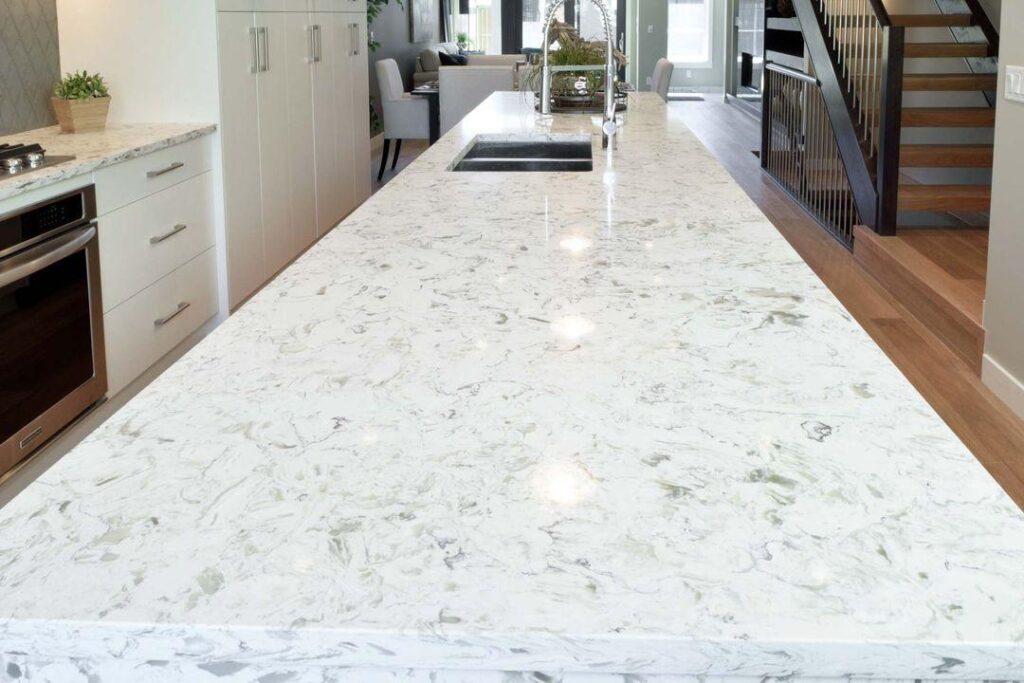
Quartz offers a wide range of colours, from bright whites and soft neutrals to bold tones and dramatic veining. Lighter colours can make a space feel larger and brighter, while darker tones add contrast and depth.
Pattern choice also matters. Subtle designs create a clean, modern look, while quartz styles that mimic marble or natural stone add visual interest. When selecting colour and pattern, it helps to view full slabs rather than small samples to better understand scale and movement.
Finish Options and Their Impact
Quartz countertops are typically available in polished, honed, or matte finishes. Polished quartz reflects light and enhances colour clarity, making it a popular choice for kitchens. Honed or matte finishes offer a softer, more understated appearance but may show fingerprints or smudges more easily.
Choosing the right finish depends on both aesthetic preference and maintenance expectations. Polished finishes tend to be the most forgiving in high-traffic spaces.
Maintenance is another factor to consider when learning how to choose quartz countertops. Quartz is non-porous and easy to care for, but proper cleaning helps preserve its finish over time. If you want a simple breakdown of daily care and best practices, this guide on How to Clean Quartz Countertops explains what to use and what to avoid.
Thickness and Edge Profiles
Thickness plays a role in both appearance and cost. Standard quartz thicknesses are commonly two or three centimetres. Thicker slabs create a more substantial look but may require additional support and higher investment.
Edge profiles also influence the final design. Simple eased or straight edges suit modern kitchens, while more decorative profiles can add character to traditional spaces. Selecting thickness and edge style early helps ensure the countertop complements the overall cabinetry design.
Quartz in Kitchens vs. Bathrooms
While quartz works well in both kitchens and bathrooms, design priorities may differ. Kitchens often require surfaces that handle daily cooking, spills, and heat exposure, while bathrooms benefit from quartz’s moisture resistance and ease of cleaning.
In bathrooms, quartz is commonly used for vanity tops, integrated backsplashes, and even shower surrounds. Choosing coordinating quartz styles across spaces can help create a cohesive look throughout the home.
Budget and Long-Term Value
Quartz countertops typically sit in the mid to upper price range, depending on brand, colour, and complexity of installation. While the upfront cost may be higher than laminate, quartz offers long-term value through durability, low maintenance, and strong resale appeal.
When considering how to choose quartz countertops, it helps to weigh initial cost against long-term performance. A well-selected quartz surface can maintain its appearance for years without the need for sealing or specialized care.
Choosing Quartz Countertops
So, how to choose quartz countertops that truly work for your home? Focus on how the space is used, select colours and finishes that align with your design goals, and choose thickness and edge profiles that complement your cabinetry. Quartz offers a balance of beauty, consistency, and practicality that suits many modern homes.
At Zen Living, homeowners are guided through quartz selection with a focus on lifestyle, design cohesion, and long-term performance. Choosing the right countertop is about more than trends. It’s about creating a space that functions beautifully every day.
If you’re planning a kitchen or bathroom renovation and want expert guidance on quartz countertops, Zen Living can help you make a confident, informed choice that fits your home and your goals.